The grim progression of bloody autocrats in major as well as lesser quarters of the globe can make for personal and political paralysis here in the U.S. When Alexei Navalny is snuffed out in Russia and Vladimir Putin grinds on to occupy Ukraine, or when Xi Jinping stamps out dissent in greater China and pursues dissenters in their escapes, what is left for American “friends of freedom” to do?
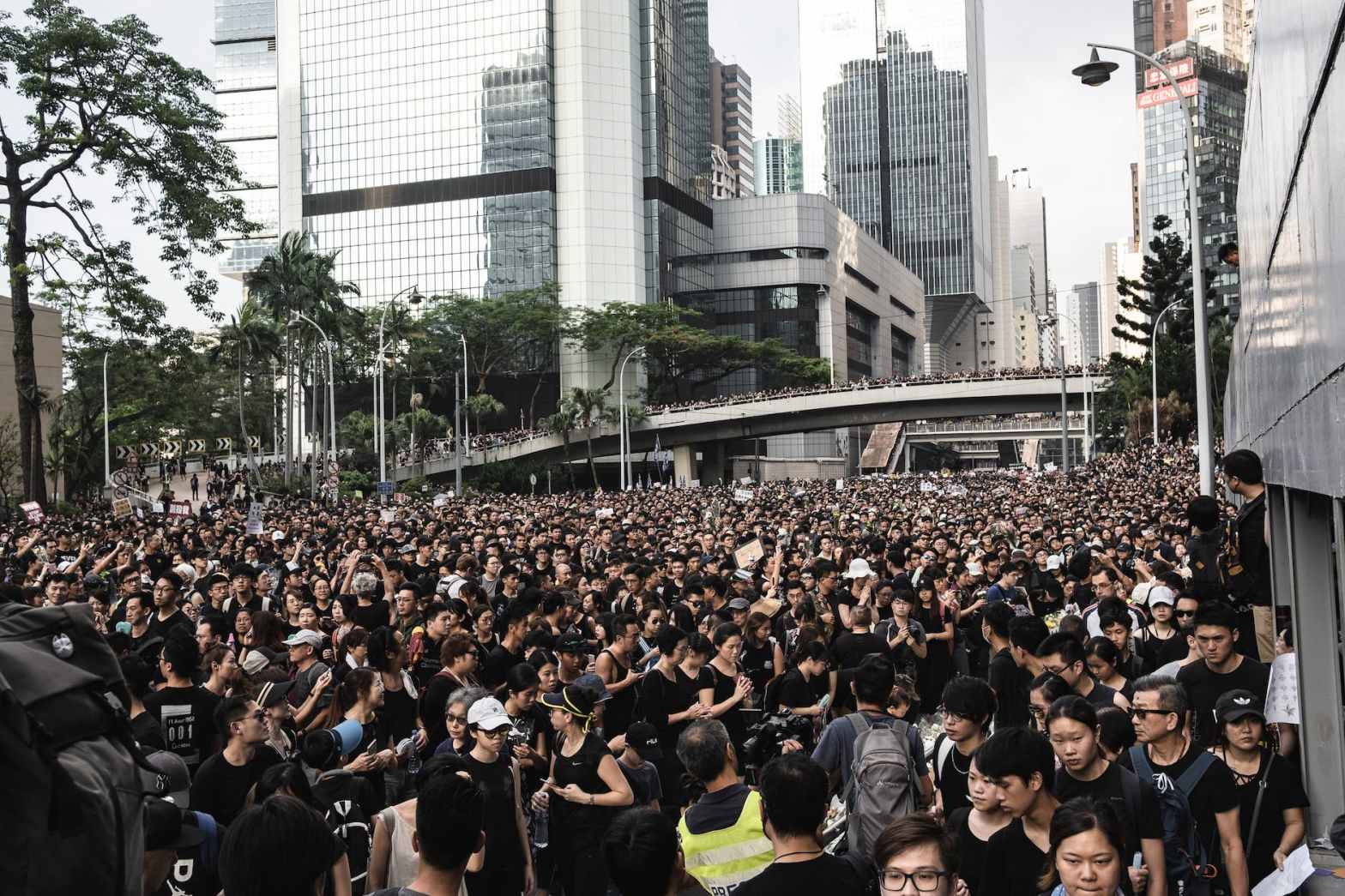
That was on the table this week at a lunch I attended in New York City with two dozen others from news media or NGOs that support independent reporting. Hong Kong was the specific focus. Increasingly pro-Beijing officials there have trampled on longstanding rule-of-law protections for speech, and the worsening restrictions have swept up hundreds to jail and already (along with uncoincidental economic woes) led hundreds of thousands to leave the once-great city.
We talked mainly about Jimmy Lai, the 76-year-old former publisher of Apple Daily, the tabloid that the Chinese Communist Party most needed to–and forcibly did–shut down. The ailing but (according to his longtime aide Mark Simon, who was with us) still-earnest Lai has been locked up for three years now on trumped-up charges while the Hong Kong authorities orchestrate his main event: a show trial for violating the “national-security law” imposed there in 2020 and widened since.
Blessedly, remnants of pre-Communist Hong Kong have formed support organizations for Lai and other dissidents, most notably the Committee for Freedom in Hong Kong Foundation. Its president, author-journalist and ex-civic leader Mark Clifford, also addressed our gathering, held under the auspices of the Overseas Press Club.
We discussed the importance of lending continued independent media ears to Hong Kong’s stifled voices, even as China’s rulers seek to cite contact with Western interests as evidence of collusive sedition. More broadly, it is helpful to spotlight constantly the role of outside business, institutions and governments–especially the U.K.–in their interactions with a repressive Hong Kong and, of course, its Chinese masters. Beijing is bothered by the attention–this is why opposing sounds are silenced.
Many of us personally renounced our onetime links to Hong Kong long ago, but that of course was an empty proclamation. What is more meaningful is a sturdy chronicling of the suffering of those who remained under the tyrant’s lash (including Jimmy Lai, who chose to stay) and of the predations of a dictator and system with eyes on another target, Taiwan. The weight of world opinion is not enough at any particular point to force evil back, but ultimately it can bend history. The first order now is to deny cover to complicity with the thugs. —Feb. 23, 2024
 Tim W. Ferguson