Providing “affordable housing” in the midst of a price surge on the East End of Long Island, N.Y., is challenging enough—but the additional political wrinkles that come with each specific project were on display this month at a community-board meeting in the North Sea hamlet of Southampton town. It took place not far from where the first English colonists landed in the area in 1640.
The session was held to air (again) reactions to a proposed 34-unit rental project on a wooded lot that had been assigned 5-acre minimum residential zoning. Such a classification is the result of past efforts to contain “overbuilding” in the town from smaller lots—this was before expense became such a consuming barrier.
North Sea sports much bay waterfront, with occasionally splendid homes and seasonal or weekend gentry, but most of it is populated with fulltime residents in more modest domiciles built decades ago. Back then, they could enjoy a wooded or small-dock retreat, removed from the Hamptons summer crowd along the ocean. Now they’re more likely to feel pinched by crowding around them and pass-through traffic much of the year.
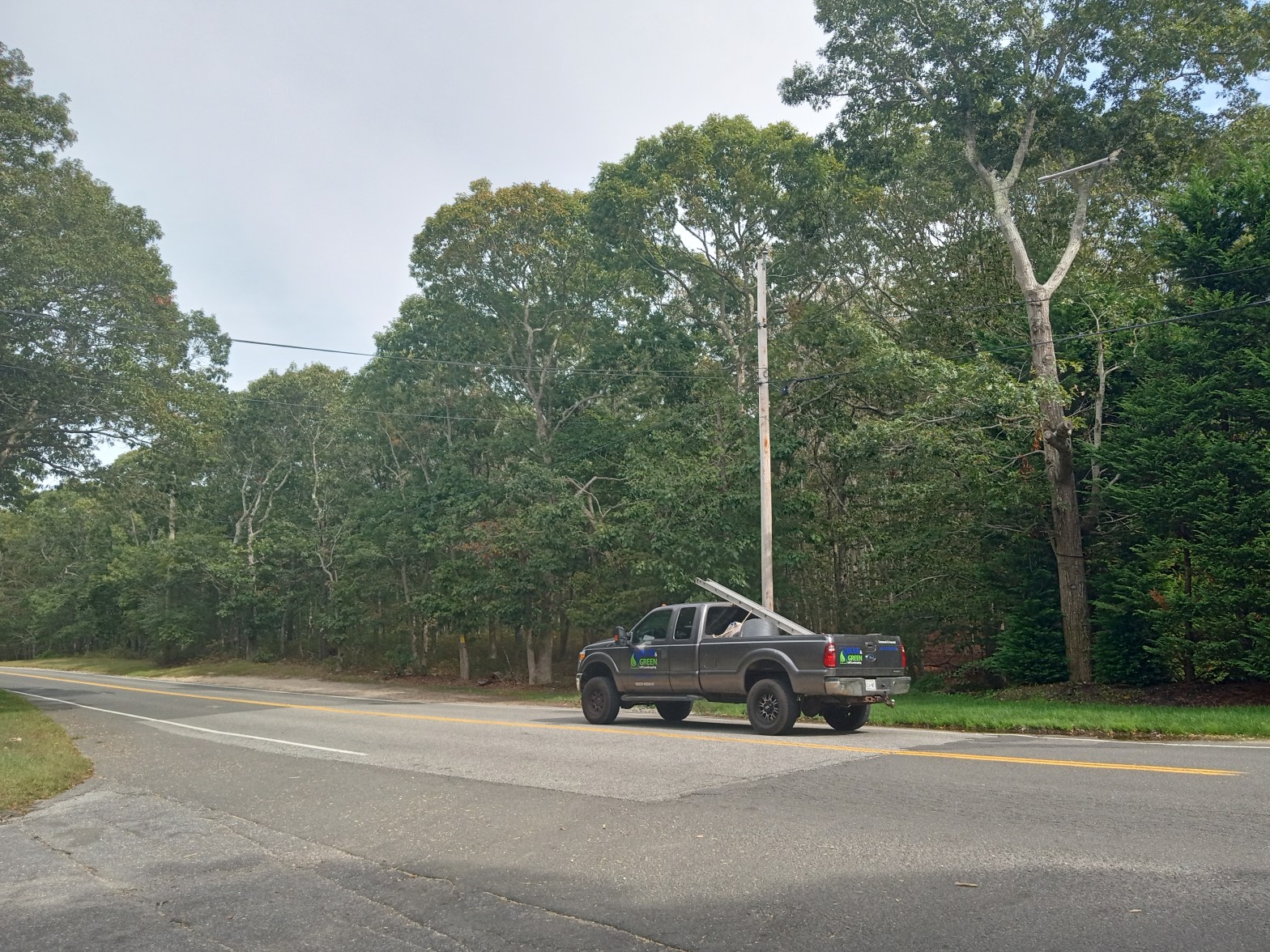
So the more outspoken residents there tend to have a chip on their shoulders about how the area is treated, compared to the grander parts of town. For instance, North Sea was relegated to hosting the town dump in generations past—it’s now a recycling center and landfill up the street from the planned apartments. And when it comes to heightened efforts to develop wage-earner housing in Southampton, some at this month’s meeting reiterated complaints that too many such projects are being “steered” into North Sea. A 50-unit condominium not far away from the one at issue was put through in 2005, and other neighboring lots are possibilities for more. This, in what is still a rural-seeming stretch, as the above photo of the 8.6-acre site under discussion shows.
The economics of construction costs and land prices usually demand attached, multifamily buildings to achieve affordability. But this is not what many existing homeowners want. Stephanie McNamara, who chairs the community council that hosted the meeting, explicitly prefers half-acre, single-family plots—the way it used to be in North Sea. (You won’t find many such properties at under a million dollars now.) So far, her group has won concessions in that direction from the town’s housing administrators on a few subsidized developments.
But the “Epley” project (so called after the prominent Southampton family member proposing it) is more attuned to market pricing—and dense. Because it wouldn’t take government grants, said supportive town councilman Bill Pell at the meeting, it could limit tenancy to participants in the local workforce. This is a popular notion—versus the idea of unselective “affordable” units going to undesired outsiders or opportunistic part-timers. The Epley rents, though, reportedly would begin at $2,500 a month, which prompted skepticism about who in that workforce could cover that. “Would you want it to be less?” a supporter fired back.
The 40-some attendees (an unusually large turnout for the monthly gatherings) heard from two elderly volunteers for the North Sea fire and EMS services that a dearth of younger nearby recruits—who can’t find starter residences—means untimely responses when those longtime homeowners may call for help. (North Sea, like many parts of Long Island’s East End, relies on volunteers for some emergency services.)
So the evening went, back and forth. “A pig is still a pig!” even with the lipstick of local preference, one voice sounded. Road dangers and water pollution also figured in the opposition’s arguments. A minority joined Pell in emphasizing the unmet housing demand. Soon he and the rest of the five-member town board will have to decide on the change of zoning for the Epleys to proceed. If that goes through, hearings will follow to fine-tune the development, likely shaving the unit total and surely adding costs. Maybe it would then still pencil out and get built.
The YIMBY movement—Yes In My Back Yard—to erect more housing in America’s cities and towns has scored recent gains, particularly at the state legislative levels, where localized resistance is less dominant and the cries of a financially-stressed young population are heard. But at the ballot box, discontent is felt from an older set who have seen their familiar settings already disturbed by economic upheaval—from both wealth and poverty. New York’s governor Kathy Hochul, a Democrat, entered office with a forceful housing initiative but backed away as the suburbs rose up against her party. (A substitute initiative hasn’t satisfied everyone, either.)
If all politics are local, as the saying goes, it’s worth tracking the course of YIMBY in North Sea. –Sept. 29, 2025
 Tim W. Ferguson