New York City, like many urban areas, has suffered vacant storefronts in recent years. The causes are likely many: online shopping, property crime, difficulty in hiring low-wage staff or paying the going rents. An article at politicsny.com this week notes that some city councilmembers are on the case and, as often, blaming landlords. Even aContinue reading “Empty or Illicit? NYC Shops for a Solution”
Author Archives: timwferguson
Dictator, Not Democracy, Initiated Korean Miracle
The most interesting aspect of yesterday’s discussion at the Korea Society in New York concerned Park Chung Hee, the transformative autocrat who ruled from Seoul for most of the 1960s and 1970s. He was an army general who seized power in 1961 and maneuvered, sometimes brutally, to maintain it until he was assassinated in 1979.Continue reading “Dictator, Not Democracy, Initiated Korean Miracle”
The Housing Issue Begins to Bite
As we’re reminded constantly, the U.S. is an increasingly polarized society, politically and otherwise. It is getting ever more so “otherwise” in the housing market, where many enjoy rising property values and easy mortgage payments while others are pressed for shelter anywhere near their desired locations. This affordability issue has gained steam, and is causingContinue reading “The Housing Issue Begins to Bite”
A Dollar Store with a Difference
A few months short of its 42nd birthday, the California-based sundries-and-more chain 99 Cents Only is going to die. An Orange County columnist for the Los Angeles Times delivers this fond obituary while visiting a store in Santa Ana that I used to patronize, and captures much of the appeal. He doesn’t mention the long-running,Continue reading “A Dollar Store with a Difference”
Last Shot at New Golf in Greater Hamptons

When an 18-hole golf club—private and exclusive—opens in the next couple of years at the controversial Lewis Road luxury development in East Quogue, it will mark the latest and probably the last of 135 years of links building on and around the South Fork of Long Island. This will bring to 20 the number ofContinue reading “Last Shot at New Golf in Greater Hamptons”
YIMBY Can Populate Conference Halls
This weekend’s New York Times article marvels over the apparent embrace of New Urbanist notions of densified and commercially active housing corridors by a seemingly fresh breed of market-oriented libertarians. They have come together under various banners of YIMBY–Yes In My Back Yard–to address a scarcity of “affordable” homes in many areas of the country.Continue reading “YIMBY Can Populate Conference Halls”
Ruptured Democracy? Add a Think Tank
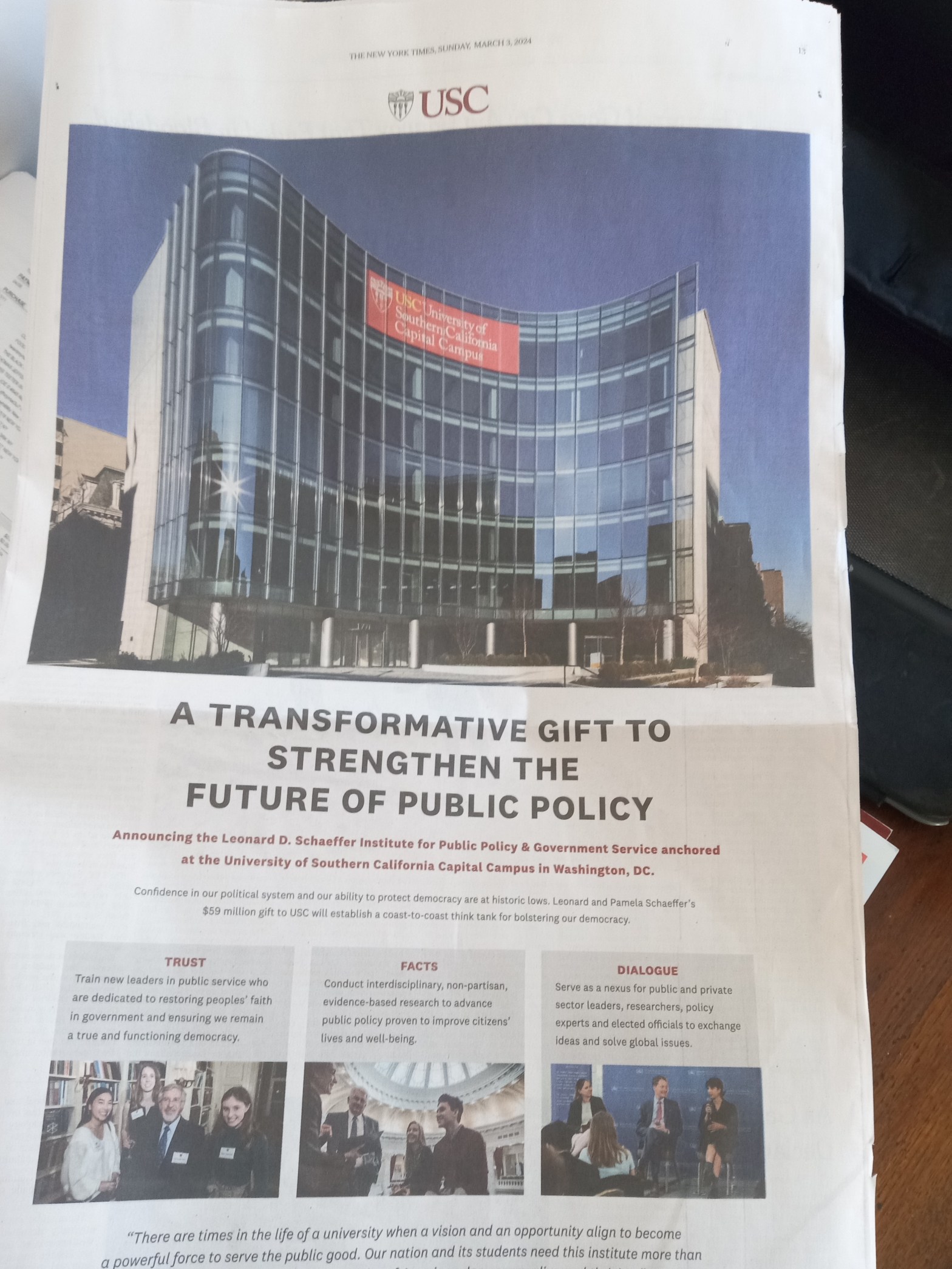
A full-page advertisement (there are still a few!) in today’s print New York Times salutes an act of philanthropy but is full of ironies. The gift is $59 million from the HMO fortune of Leonard Schaeffer and his wife to the University of Southern California, for establishment of a (named for him) Institute for PublicContinue reading “Ruptured Democracy? Add a Think Tank”
A Twilight Strategy on Hong Kong

The grim progression of bloody autocrats in major as well as lesser quarters of the globe can make for personal and political paralysis here in the U.S. When Alexei Navalny is snuffed out in Russia and Vladimir Putin grinds on to occupy Ukraine, or when Xi Jinping stamps out dissent in greater China and pursuesContinue reading “A Twilight Strategy on Hong Kong”
He Comes to Bury the Tax Cutters

Michael J. Graetz long ago established himself as a nettle in the side of those who promote lower tax rates for economic growth–in recent times what’s known as a “supply-side” agenda. Today Princeton University Press publishes the Ivy League law professor’s book chronicling the last 45 years of that cause, “The Power to Destroy: HowContinue reading “He Comes to Bury the Tax Cutters”
Chase Is Happy to Be ‘Just Another Bank’
This Wall Street Journal article of the past week spotlights the unusual (for today) strategy of opening numerous bank branches by the nation’s largest such financial institution, J.P Morgan Chase. It comes at a time when most other banks are retreating from the branch ubiquity approach, something many had embraced in urban areas not 15Continue reading “Chase Is Happy to Be ‘Just Another Bank’”
 Tim W. Ferguson