Republicans Turn Out the Lights in East Hampton

Another epitaph for the “old Republican Party” was written this week in the township of East Hampton, N.Y., where no GOP candidate has filed for the top position, supervisor, in the November election. This story in the East Hampton Star lays out the contemporary context of the party’s demise there, which mirrors what has happened in other affluent burghs across the U.S. The shift in East Hampton (which includes hamlets such as Montauk and Amagansett) began earlier than most–in the 1970s as the area grew more closely connected to New York City and land-preservation issues emerged. But the state Assembly Speaker, Perry Duryea, hailed from there, and Republican candidates were still competitive for supervisor (occasionally winning) and victorious down ballot. No supervisorial nominee was found in 2013 but the circumstances were unusual and the party still captured five town positions that year. This year another wipeout is virtually assured. ICE raids on the immigrant population have further roiled locals this year (East Hampton’s school rolls are half Latino), and campaign money is increasingly the domain of Democrats. Periodically, Donald Trump alights in Southampton town, to the west, for fundraisers–if not so many votes–but he needn’t bother trekking the extra 10 miles to Long Island’s tip. –Apr. 25, 2026

https://www.easthamptonstar.com/government/2026422/its-official-no-republican-east-hampton-town-supervisor

Socialist Mayor’s Surtax: An Idea for Hamptons-Like Homes?

New York City Mayor Zohran Mamdani’s push* for a “pied-a-terre tax” on the sparsely used homes of putative plutocrats is not staying in NYC. At least one legislator from the northern Hudson Valley exurbs is seeking allowance for a similar punitive levy on such properties there. That shouldn’t be surprising: Resentments toward wealthy seasonal visitors who erect massive houses in such formerly rustic areas is commonplace. The complaint is that these structures or compounds change the character of neighborhoods and drive up real-estate prices such that many locals can’t afford to reside where they grew up or work. (Worse, the places may be used for glam short-term rentals.) It’s said this can hollow out towns during the remaining months, and when the rich do show, their spending skews nearby retail toward luxury and out of reach of everyone else. No wonder NY State Sen. Patricia Fahy, D-Albany, has floated the idea of getting more (besides the basic property tax) out of these hides. Organized resistance can be expected from those in the business of building, equipping and selling such properties–a potent constituency of its own. I’m watching whether Mamdanism spreads to ground zero of conspicuous consumption: The Hamptons. Yesterday, I queried the office of Tommy John Schiavoni, an Assembly Democrat from Long Island’s East End with progressive as well as prosperous backers. So far, no response. –Apr. 24, 2026

https://www.cityandstateny.com/policy/2026/04/upstate-dems-push-pied-terre-tax-outside-nyc/413038/

* In tandem with NY governor Kathy Hochul.

Luckin’ Out With a Morning Joe App

Bloomberg had a story this week about Starbucks seeking to establish a technology base–perhaps outside the U.S.–where it could build out an internal team to (presumably) digitize more of the beverage-cafe business. It’s already doing that–while also following its new CEO’s mantra of re-personalizing the customer experience–but according to the article has wearied of paying outside contractors to provide such support. All of which is to say that any sustainable mocha model is going to need tech. I have seen one future of that with a visit this morning to one of the new Manhattan outlets of Luckin Coffee, China’s answer to Starbucks. All purchases, including my Coconut Latte, have to come from an app or online, which for an oldster like me meant a couple of minutes to set things up. After that, and with impressive automation, the drink appeared silently at the counter with my numbered receipt in less time than that. No need for chatter or pay swipes (or tips). I sat at one of the few bench seats and watched a few regulars pop in the door and round their orders right up, a staffer’s wish to “have a nice day!” following them out to Third Ave. Yet it was a modest morning rush–one of the three baristas told me business has been slow since this month’s opening, though it picks up at lunch. Apparently in the AM, rushing New Yorkers aren’t so geared to let their phones “call ahead”–in fact, some beef about it and walk out, I was told. This time, at least, I was more intentional and was rewarded with a good cuppa, and at the introductory app price of $1.99. (Ideally “Luckin Coffee U.S.” does not now link my mobile to the Chinese state tracking apparatus.) Luckin is far from the only coffee house streamlining its transactions now, but it is an acknowledged global pioneer at it. There was, however, one missing Starbucks element: no customer toilet. But have a nice day! –Apr. 23, 2026

https://www.bloomberg.com/news/articles/2026-04-23/starbucks-hunts-for-another-tech-office-including-abroad

Build But Don’t Park Here? A Town Says No To That

Zoning reformers want to get rid of some strictures that were written into urban and suburban planning laws in the 1900s. Mostly, these changes are pushed by New Urbanists or YIMBY* activists who seek to remove “exclusionary” regulations that deter new housing, especially for potential residents of lesser wealth or income. But, not surprisingly, these efforts can meet pushback by those who like their neighborhoods as is.

A reminder came this month in Lakewood, Colo., a western suburb of Denver (pop. 157,000) whose council had enacted more permissive allowances for small multifamily structures in previously single-family zones, even without commensurate off-street parking. Voters repealed the measures, overwhelmingly.

Colorado law, as in other statehouses, has shifted to push against tight local zoning, for reasons of “equity” and to alleviate pinched housing markets. So it remains to be seen whether popular referendums such as Lakewood’s (or local policies to the same effect) will hold up as they are challenged. The federal government under the Trump GOP has ceased to weigh in against single-family zones.

The parking aspect of the Lakewood fight attracted the attention of Reason magazine’s Christian Britschgi, who favors looser limits from a property-rights perspective but who also has a YIMBY bent for more housing production. In fact, however, a certain property right–motor-vehicle ownership–has a lot to do with many of these zoning disputes.

As zoning developed around the U.S. in the last century, the gathering effects of cars and trucks were a primary motivation. Planners sought to contain the crowding effect of too many vehicles by imposing parking requirements on land development in order to, er, curb street congestion. A related aim was to keep cars and trucks off the frontages of parcels.

New Urbanist reformers generally disparage the prerogatives accorded to motorists. The most avid among these activists seek car-free zones or high fees on possession of private automobiles. A general target, however, is “free parking.” The notion of letting someone command public curb space for their four wheels without so much as a meter is abhorrent in these circles. (And no, they don’t want them on the lawns, either.)

Putting a price on space makes theoretical sense, to some libertarians as well. But the idea of “taking back the streets” can be highly unpopular in settled communities where the familiar ways of life seem to be just fine. It’s not just parking but fears of traffic, which can seem worsened by constricting the flows along some routes–another reformist goal. For better or worse, personal transport remains the American default. Add to this whatever other apprehensions attend to a concentrated housing push, and you get popular (if underfunded) resistance as in Lakewood.

The question then becomes, should wise policy seek to “live and let live” by deferring to the wishes of a resident majority? Even when a few will be blocked from building, when some may suffer exclusion and when demographic trends suggest those residents will price out a supportive labor force or family members? Would it make for more comity, instead, to seek out “blighted” areas or entirely new ground to create better visions of modern living?

In other words–or acronyms–should NIMBY be able to shoulder aside YIMBY to enjoy breathing room? To a degree, yes, in our fractious social climate, this could be for the best. –April 15, 2026

*Yes In My Back Yard, as opposed to Not IMBY.

USPS Running Short of Cash…and Customers

The U.S. Postal Service has flashed another fiscal alert to its patrons in Congress–funds will run dry by next year without relief. The attached brief from the Cato Institute frames the falloff in usage that has precipitated the latest mail crisis. Simply put, even with the various (but limited) efficiencies this public corporation has been permitted, it hasn’t been able to shrink in tandem with its customer base. Given the already low prices for marketing mail, it’s hard to see that business being enticed back. The first-class letter, at 78 cents still a money loser, is supposed to be an American birthright but is close to being an artifact. (And, in any case, the real cost of sending meaningful content is now at least $6.08–the postage plus the cumbersome fixing of a bar-coded wrap so the USPS can track the item. I waited in the usual slow line to get that “Certified” delivery from NYC to Florida, which has now taken 4 days and counting.) The walls are crumbling on this operation and literally so in some of its thousands of antiquated post offices. The politics of postal reform remain fractious, but maybe a wave of digital-savvy congresspeople will help size this relic for today. –March 27, 2026

https://www.cato.org/blog/postal-service-out-cash

UPDATE, April 6, 2006–As of this afternoon, the mailing described in parentheses above is still “Moving Through Network” according to the USPS tracking. On Apr. 1, it was said to have reached West Palm Beach. I launched a USPS search on Mar. 30, one week after I mailed the item with a postal clerk. (It’s not clear that the item actually has been found, despite the “track.”) This exemplifies why the Postal Service is an anachronism.

The Passing of a Pine Barrens Partisan

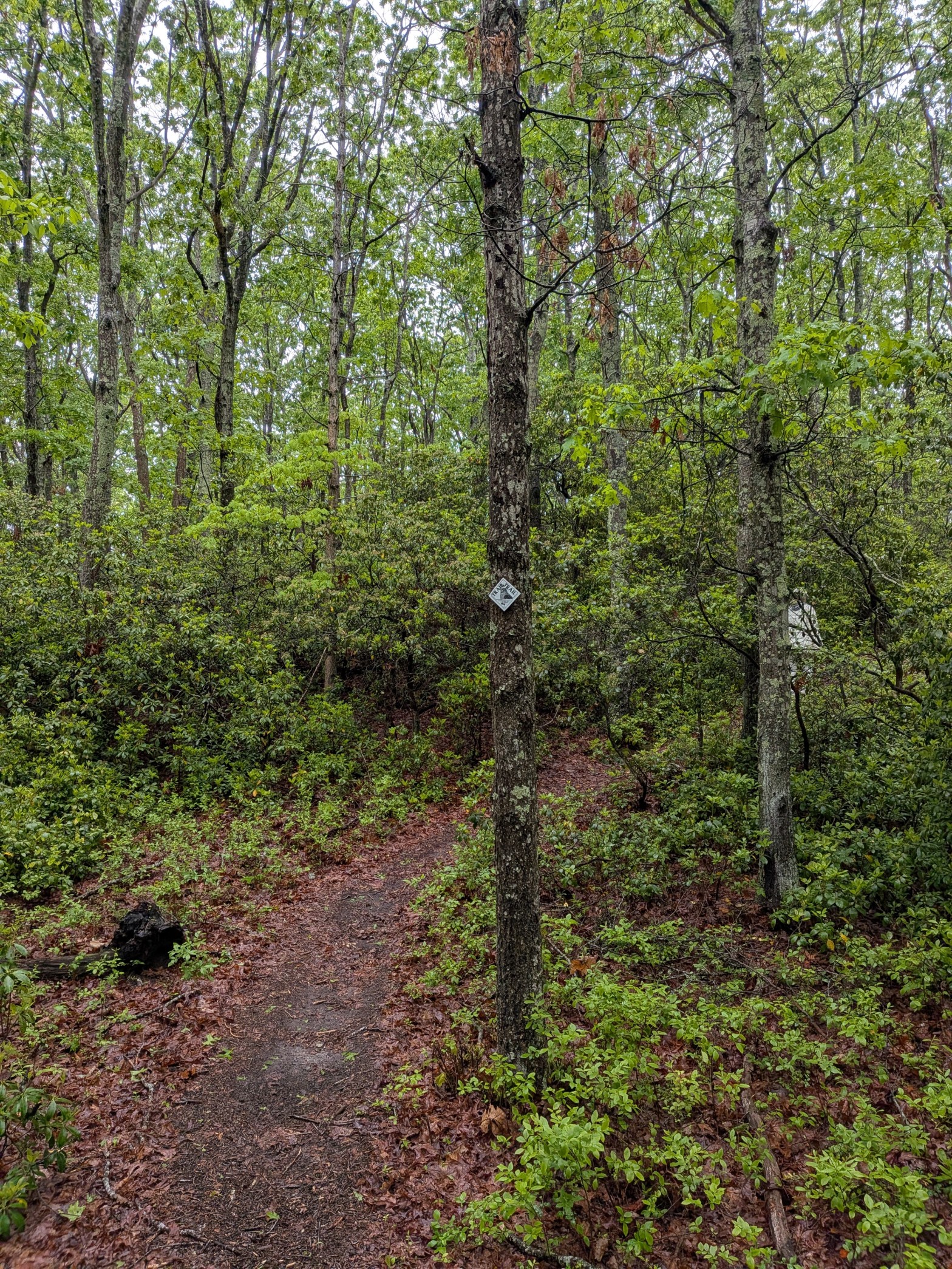
Decades after hydrologists and other Earth scientists had identified the Central Pine Barrens of Long Island, N.Y., as sitting atop a vital aquifer and fostering a complex ecosystem, the 120,000 remaining acres were still being treated as scrublands. By the 1970s they separated the increasingly precious Hamptons and farm belt of the eastern end from the suburbs that had risen in western Suffolk County, and commercial interests had plans to put them to use: for industry or housing, generally, or odd one-offs like a fireworks factory or a huge roller rink. One golf course had already been built and others were envisioned. And that water beneath the surface? Some promoters wanted to bottle it. A trio of environmental academics took up for the forests (which include cedar and maple) and started the Long Island Pine Barrens Society in 1977. Before long they found their (foghorn) voice in P.R. man Dick Amper, an area resident and clean-water hound. The stakes were rising as the local development boom took off in the 1980s. As the society’s pugnacious director, and aided by an increasingly preservationist political bent on the East End, Amper got state protective legislation enacted in 1993. With that leverage and fitful support from surrounding town and county governments, the society by 2020 was celebrating the shielding of 100,000-plus acres from routine building–more than half of that from any disturbance at all. Amper stepped down in 2023 and died this week, one more departed warrior from the pivotal land-use battles of the Hamptons’ recent past.

Chicken or Egg: A Farm May Disturb Hamptons-Adjacent Rusticity

It’s a conceit on the East End of Long Island, N.Y., that the agricultural character of the area should be preserved. Attempts to do that go back half a century, to when land values rose to the point that farm families wanted to sell out to subdividers. But the gloss of today’s version–mostly vineyards and boutique row crops–obscures the sometimes noxious aspects of living near active plant and animal raising, which earlier generations accepted. A particular rub has developed in the North Fork town of Southold, where a 16-acre plot that had been legally preserved–though it apparently had not been farmed in that same half a century–was bought by someone who plans to tend 6,000 hens on it. Some nearby homeowners, who may have been attracted by proximity to the fallow acreage, are screaming about elements of the intended egg (or chicken) operation. As the latest East End Beacon story on the controversy explains, some unusual twists to Grant Callahan’s application exist, but then ag preserves often involve the unexpected, as on the South Fork or “Hamptons.” (Who knew that trees or horses could be a problem?) Such are the vexations in some of America’s most valuable precincts.

Big Part of Phone Costs Is In the Small Text

Recently I succumbed to replacing my mobile phone. Though I chose one of the simpler Android models, and avoided nearly all add-on accessories, the price jumped up as I got to checkout. The reason: New York’s voracious taxing authorities. Whether it be on monthly usage bills or on purchases of the devices, governments have seized on this now ubiquitous personal computer as a way of escalating their take with seemingly little organized objection.

At my request, my cell-service provider broke down the official damage: Better than half was state and local sales taxes–I expected that. But more than 43% of the add-on came from assorted state and local excise and “mobility” or transit charges. These are junk fees put on consumers who have no real alternatives (much like the add-ons for vehicle purchases that only some drivers can get around). All together, the public sector got 16% on top of my bill–including on the shipping charge.

From a September 2025 report from the Tax Foundation policy group, I see that New York’s are the 4th highest phone-tax charges. (Everybody in the U.S. pays an additional 13.36% federal tax on mobile service bills.) Not surprisingly, Illinois and especially the city of Chicago impose the worst penalties. I suppose I should be grateful for small favors.

But doesn’t New York City have a new young mayor who ran on an “affordability” platform? Alas, he also has a socialist agenda, and that will need his wireless constituents to keep ponying up. –March 16, 2026

The (Unwanted) Bridges of Suffolk County

The nowadays Quixotic notion of bridging Long Island Sound surfaced in the news this week, with Newsday picking up on such a flare in the Connecticut legislature. The scheme in question would link Bridgeport with Kings Park, N.Y., and the Sunken Meadow Parkway through western Suffolk County. It would have a ballpark cost of $50 billion and isn’t going to happen for that and other reasons. But the item did stir memories of when such a bridge–and much farther east, touching down in the Wading River hamlet of Riverhead town–was one of multiple such crossings seriously considered by state planners. (Another idea was for a span to Orient on the North Fork of Long Island with subsidiary links through Shelter Island to what became “the Hamptons.”) An element in all these visions, which were alive into the 1970s and still floated by Gov. Andrew Cuomo in 2017, was that Long Island’s East End needed a direct connection to lower New England. In today’s world, the aim would be to alleviate congestion on limited east-west roads at peak times or in an emergency. But in earlier decades, the hope of some was to bring more mainlanders to enjoy the ocean splendor of what was then a rural Suffolk County. (At the time, before the widespread installation of cable television, eastern Suffolk was much attuned to Connecticut, where it got its broadcast signals.) This was an era of extensive motorway construction, and fast routes to the shore were on the planning boards–one such stretch, Suffolk Route 111 that connects Hamptons traffic from the Long Island Expressway to the Sunrise Highway, was originally to go on to Westhampton Beach. However, wealth on the South Fork took off and preservation of its remaining character displaced development promotion as governing orthodoxy. The roads–and the bridges–receded into remains of the drafting tables.

Long Island Sound bridge proposal gets a hearing in Connecticut – Newsday

Hamptons Pivot: Preserve Land or the Landless?

Call it an inflection point: One of the two news weeklies on the South Fork of Long Island, N.Y., propounds, “[I]t’s time to turn the page on land preservation as a priority and begin to think about preserving something else: a workable, livable community.”

For decades under previous and current ownership, the Southampton Press with its now-sister publication, the Sag Harbor Express, has championed efforts to shield increasingly valuable acreage from development. This was the cause that, more than anything else, transformed the area from a Republican stronghold to one dominated by Democrats.

Now the scales are being tipped in favor of “workforce housing.” Staff positions in the public and private sectors have become too difficult to fill because potential or current employees can’t afford a nearby place to buy or rent. Some try, regardless, and face hours of commuting that in turn chokes the lucky-enough residents trying to get around on limited roads.

The history of efforts to build “affordable” units on the South Fork also goes back decades. Ultimately, few got done. Beginning in East Hampton township and now creeping into Southampton town’s affluent areas, the tide is turning. Planning agencies, nudged by the New York State government, are pushing past familiar neighborhood resistance.

To have the sanctity of blocking the bulldozers questioned, to have the Press/Express editorial further say, “Land preservation was the right priority for a generation. It may not be the right priority for the next one,” and to have no published pushback to this in the following week’s edition, is to witness a shift. It must be noted that the newspaper group qualified its support: for “redeveloping properties, aggressively, to avoid turning to virgin land.” But even that sort of buildout has met past objection, that it “changes the character” of the place.

The counter-argument is that holding off relatively modest housing by restricting supply and setting zoning minimums that guarantee super-expensive properties has already changed the South Fork’s character, in ways that even many of the well-ensconced do not now accept. Just how many? That will be an ongoing subject for the local press and a pressure point for the Democrats who rule the towns today. –Feb. 28, 2026

https://www.27east.com/east-hampton-press/opinion/editorials/article_2a2e7d49-ff23-49a6-baae-7dd020280dd8.html