A “second-day story” about the blue tsunami last week is that the sweep by Democrats in many previously red areas has elected an unexpected number of moderates to neutralize the influence of more obvious leftist gains in the now-majority party.
One test of this notion may come in the fate of an “abundance” agenda in Congress and the statehouses. Broadly speaking, this movement seeks to use state means–for example, by funding or other incentives–to galvanize economic growth to benefit society at large. Private capital can then exploit this foundational public investment or structure. One component of this agenda is better and smarter provision of government services.
Isn’t this a no-brainer for activist Democrats who believe in “making government work for the people”? Not exactly. Ideologues on the left do not want the marketplace (i.e. consumer preferences) to be shaping outcomes, just as ideologues on the right do not want the state to be playing any role. A typical leftist would rather impose outcomes such as “equity” from the top down. Meantime, interest groups vital to many Democrats object to reforms that would impinge on their take–labor unions above all. Even if newly elected “moderates” aren’t themselves beholden to such forces, they will soon learn that their party leadership is, and this will constrain any legislative ambitions.
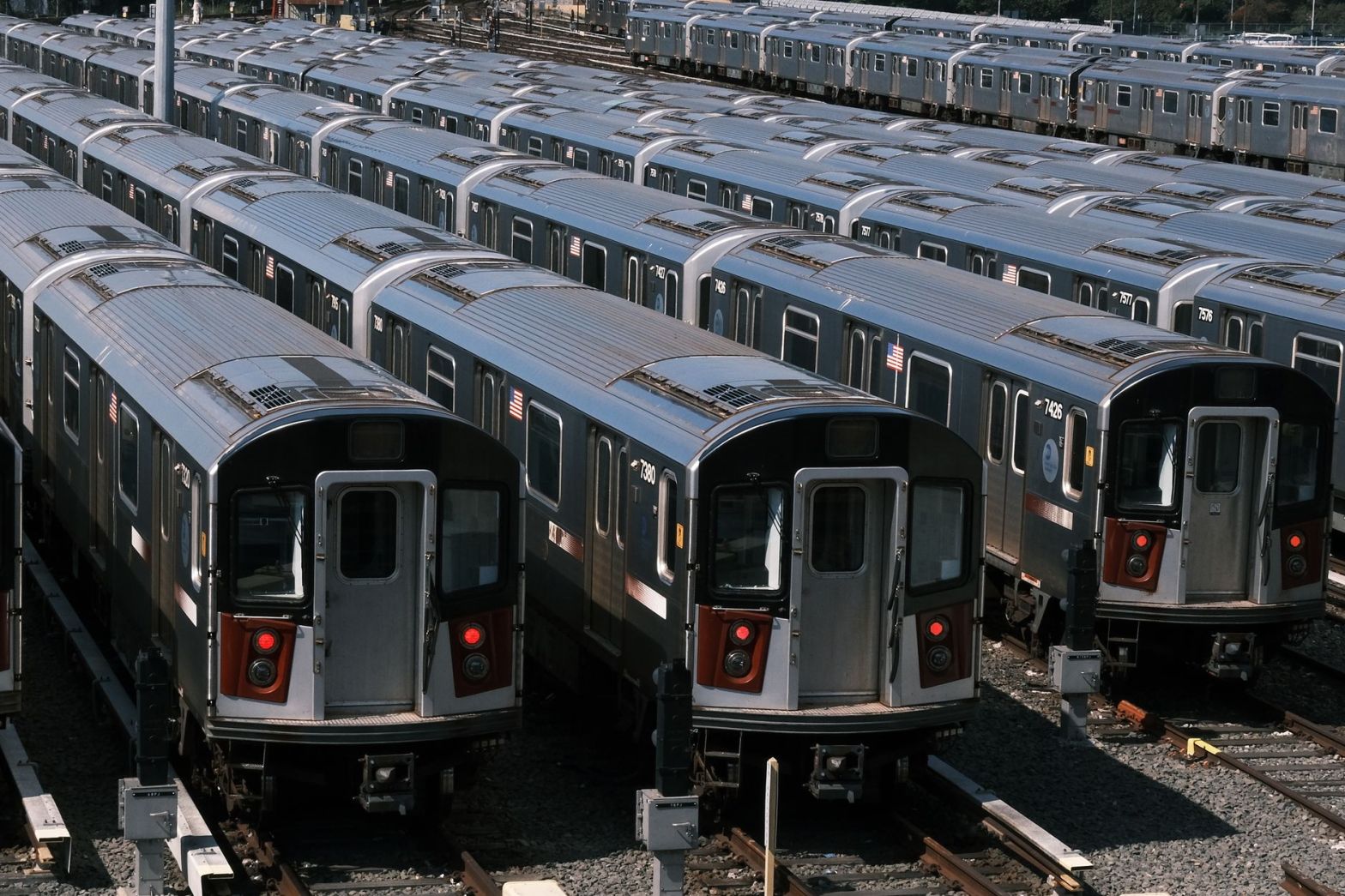
A case at hand would be the transportation sector, in particular the mass-transit systems in metropolitan areas. It’s easy to see how this ought to fit into an abundance strategy. These are classically public infrastructure: road and rail networks that require state planning and capital, plus upkeep and perhaps ongoing subsidies to encourage wide use–use that in turn advances the overall economy. To call this necessarily public domain does not, however, mean that all operational decisions need be political or that the private sector cannot be deployed to attain the systems’ aims.
Yet, the interest groups that want a certain constituency to be favored, or various jobs to be maintained or paid more, will seek to distort the goal of mass satisfaction from transit. A description of how federal law thus fosters misallocation of resources appeared in the Washington Post last May. The author, Reason Foundation transport analyst Marc Scribner, describes how the half-century-old Section 13(c) law prevents cost-saving innovation in rail systems using U.S. subsidies–i.e. just about all of American transit.
Under Section 13(c), realizable possibilities such as all-automated lines can be out. (New York City can’t even get its local transit union to agree to one-operator subway trains.) Contracting of services is also curbed unless current employees are cashed out under existing labor pacts. Such restrictions have impeded transit agencies from adjusting to dramatic drops in ridership during and after the Covid pandemic, which in turn have driven huge budget deficits and hence service cuts or fare hikes. (Might jitneys fill some route gaps, for example? Not viable with the union overhang.)
“Abundance” priorities should include keeping the mass in transit by eliminating unnecessary costs rather than diminishing the appeal of the systems. While it’s true that another choice, getting local voters to approve higher taxes to make up for less in the fare box, often works, that till can be exhausted. A major such sales levy just won in San Francisco and surrounding counties, but the electoral proposition also requested BART rail leaders to examine efficiencies to avoid future deficits.
The emergence of “sewer socialists” in municipal elections, such as Zohran Mamdani in New York, has put a new twist on transit questions. Such mayors demand that public services be more reliable, but twin that belief with advocacy of a destigmatized welfare state: Everybody experiences the same ride–and in the case of NYC buses, a free ride–and it’s paid by further taxing the wealthy. That’s a form of abundance, as long as the rich stick around to foot the bill, although with less assurance of system performance because only a few are bearing the cost. When the burden is widely shared, adequate service is more likely to be demanded. This is sustainable abundance.
Obviously, the refashioned legislative branches will be busy in the months ahead, and other matters will consume attention. But going into the 2028 election, when Democrats will be asked to go beyond criticism of “Trump Republicans” and offer a governing vision, abundance ought to be an attractive element. The wheels need to be put in motion, however, and in the case of rail transit there will be plenty of brakemen to get past. –Nov. 9, 2026

