Xi Jinping Is in the Neighborhood

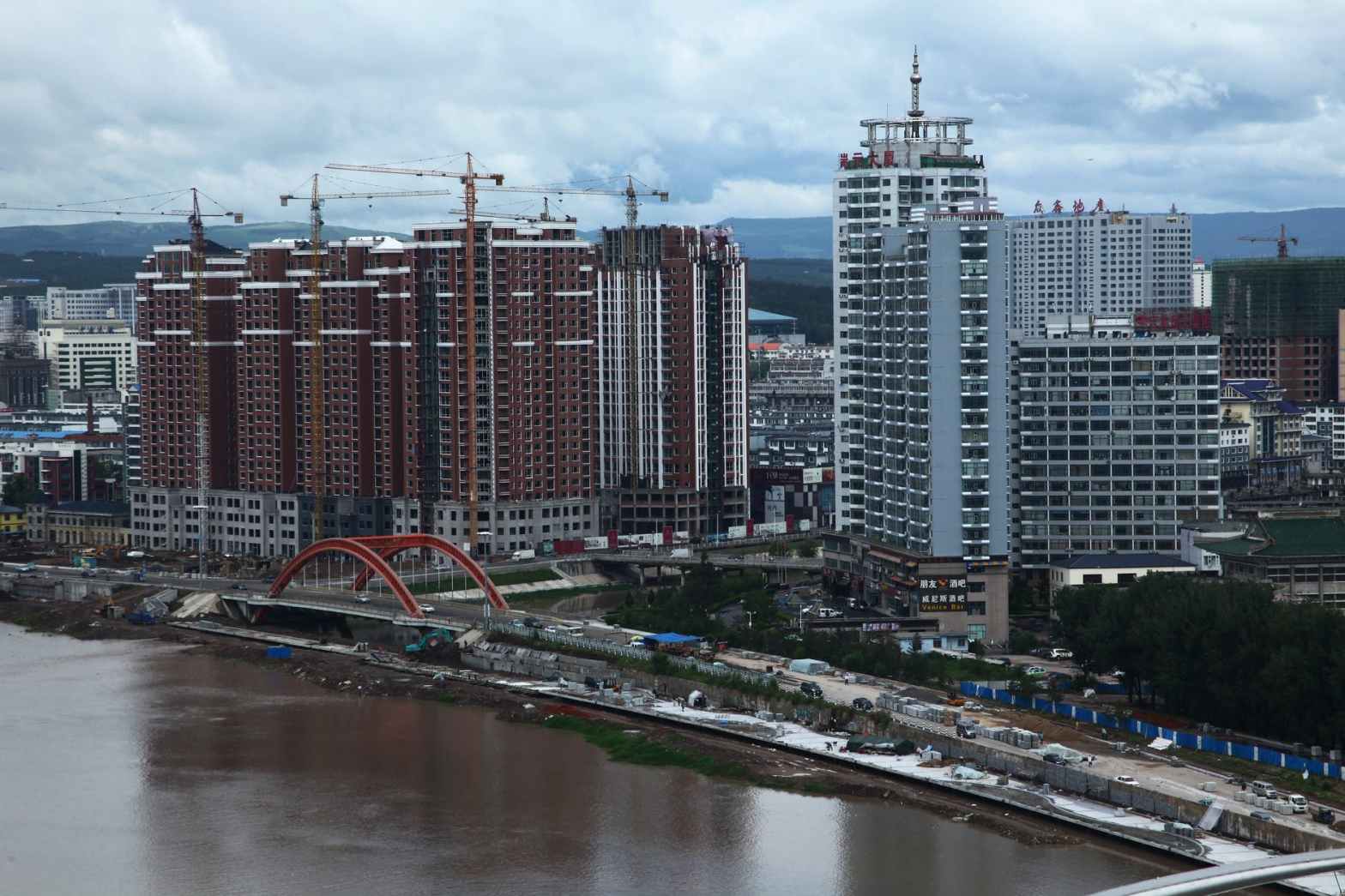
Much has been made of the Chinese Communist Party’s inroads into Africa, but less noticed is its increasing penetration of the Western Hemisphere, especially South America. This has proceeded apace for years, including during the Trump administration when regional policy hawks were supposedly on guard. This new report from the Council on Foreign Relations sheds light on the extent of economic and “security” ties–all coming with implied diplomatic sway. And it’s not just with leftist regimes on the continent. Take Chile, whose electorate has seesawed ideologically in recent decades. China advances regardless–now accounting for 34% of the nation’s trade. (To be fair, a part of that is just bargain-priced Chilean wine.) The U.S., on the other hand, shot itself in the pie when Trump pulled out of the Trans-Pacific Partnership (TPP), a non-Chinese deal that would have extended American influence to cross-ocean commerce with Asia. Now Communist China is petitioning to join the trade pact that is replacing TPP…one without U.S. participation. So as we see Xi Jinping’s pernicious presence grow on the world stage, we can find part of the explanation surprisingly close to home.

Now on Screens Nationwide: ‘Navalny’ v. Putinism

Theater showings around the U.S. today and tomorrow of this CNN Films production, “Navalny,” will include discussion with that network’s Clarissa Ward. I hope the international correspondent will press the matter of Russia’s internal dissent network, which once fueled Alexei Navalny’s rise as an opposition figure to Vladimir Putin. The quieting of that movement in the months and years now since Navalny was first poisoned, and then imprisoned, for his social media-driven democracy campaign hangs over this film. But that sad situation–which has worsened since Putin’s war against Ukraine began–was not brought out in the panel discussion that followed the preview showing I attended in New York last week. “Navalny” can still be enjoyed as a remarkable fly-on-the-wall view of this brave showman’s attempt to troll Putin politically–at times it is humorous in showing the Kremlin’s clumsiness even as the protagonist meets up with its deadly force–but ultimately one wonders whether the whole exercise was in vain. Maybe it is has planted a seed for a later revival of opposition, so we can hope that bootleg copies of the documentary make their way widely through Mother Russia’s samizdat.

Meanwhile, on the Home Front

While cable-news attention is focused entirely elsewhere, the spillover effects of failed and/or corrupt states in the Americas continue to be felt on the U.S. border, where illegal flows keep swelling. This Associated Press report on the continuing calamity in Haiti is one more omen. The so-called Northern Triangle of Central America–Guatemala, Honduras and El Salvador–remains a source of migrants, to which you can add Daniel Ortega’s Nicaragua. Of course, destitution in Venezuela remains a fact, as do the criminal cartels that act with impunity in Mexico. Food-price inflation is likely to impel further desperate journeys in the region. The refugee/immigration challenge is not limited to Europe these days–why, it’s such a multilayered problem that you’d wish a U.S. vice president to be detailed to address it!

Affordable Hamptons Housing After Saving Priceless Parcels?

Like many other affluent suburbs or resort areas, the Hamptons of New York is confronting a housing affordability crisis, which is to say that the service and support industries on which the wealthy residents rely cannot reliably staff their operations from nearby residents.

This pinch results either in unfilled positions or lengthy commutes for the non-wealthy workers. The Hamptons has relatively few rental apartments and only a couple of entry highways, so the inconvenience to these employees is felt also by the privileged townspeople, who must share the same clogged roads. Although there is a progressive contingent that wants a more “inclusive” community for its own sake, it’s fair to say that self-interest is a more compelling reason for expanding the home franchise on the South Fork of Long Island.

And a ripe opportunity for doing so looms this November, thanks to recent state legislation allowing a new tax on residential transactions to be approved by the area’s voters. Already, most of these sales are subject to a 2% levy for land and water conservation, and thanks to the boom in the luxury market, that Community Preservation Fee collected $210 million in the East End towns last year. If the proposed housing tax had been in effect, it would have pulled in $50 million more.

What goes for “affordable housing” nowadays is not cheap to build, but $50 million could deliver a slew of it, perhaps as much as has been constructed in the four decades that the issue has been percolating in the Hamptons. During that time, there’s been a lot more talk than action, not just because land is at a premium but because, when bulldozer comes to scrub brush, there’s usually plenty of neighborhood resistance.  Cue apprehension over congestion, school seats, environmental impacts, etc.

In fact, the topic of lowering payments for new homebuyers had been on the minds of South Fork officials even before local real estate really took off from the 1980s. As Robert Cameron ended his terms as town supervisor in 1971, he told the Southampton Press he was worried that the hamlet of Hampton Bays was becoming “saturated” with Section 235 housing, a Great Society program to provide home loans free of down payments.  Hampton Bays, which has no oceanfront and is west of what is generally considered to be the Hamptons, was largely built out with middle-class bungalows on small lots in the 1960s, and Cameron feared it was taking in future trouble.

To the degree the South Fork has found pockets of affordable housing, they’ve tended to be clumped in those western reaches. A separate, frequent location has been along the Bridgehampton-Sag Harbor Turnpike, in a stretch well removed from both of those two villages proper. (Proximity to a busier roadway is usually an attribute, as residents of such units are considered more transit-dependent.)  But even where such spots are identified and set aside—typically as a dedication by a developer seeking market-price housing approvals—the yield is a handful of homes and the process can take years, if it is approved at all. In one of the cases along that turnpike in the 1980s, a would-be 28-lot plan was lost to the late discovery of night salamanders on the property. A proposal for 50 units of senior housing nearby died about the same time.

But the fundamental economics of housing in the Hamptons was established by the larger land-use battles beginning in the 1970s. That was a time when major developers still envisioned subdivisions of a thousand or more tract homes in the woodlands and former potato fields. Such a buildout, and the zoning that could have permitted it, was junked in favor of large open-space dedications after epic pre-Millennial battles. From then, if middle-class families were to purchase much square-footage, they would need some kind of public assist.

With a more solid Democrat majority in recent decades, East Hampton town has been more assiduous about building subsidized housing than has Southampton, but that is a relative measure. Over four decades, the two localities have added maybe a couple hundred such homes.  

Tom Ruhle, who in recent years has been East Hampton’s housing director, was both a planning and town board member as part of the 1980s preservationist wave there. When I met with him in 2019 in a satellite town office looking over the picturesque ocean bluffs in the hamlet of Amagansett—largely saved from building during those earlier days—he acknowledged with an ironic chuckle the circularity of his career. “People can’t afford to live here,” he said, in part because of his efforts to save the land for the people who lived there.

East Hampton today has new “workforce” housing  afoot, while Southampton’s planning board is weighing objections to two substantial projects. One is in Quiogue, a more rural buffer between the toney villages of Quogue and Westhampton Beach. The other, behind a church property, borders on an old, unadorned neighborhood in Southampton Village. The Quiogue site is well-situated for a looming Amazon distribution center and other industrial employment surrounding the nearby Gabreski Airport –thus likely to keep some newly employed commuters from the congested highways.

The other project would bring further density to a condo-heavy stretch of the county road that brings Sunrise Highway traffic to the South Fork. That is one part of Tuckahoe, another hamlet of the town that often feels saddled with more than its share of higher-density development. In 2020, I spoke with Peter Callos, who’d been a vocal opponent of such activity in the area as impinging on the quality of life for longstanding residents. He, like Tom Ruhle, accepted that curbing supply has the effect of favoring wealthier buyers, but complained the issue was being decided without the public “having a choice.” Incrementally, as only the rich and the policy-favored get to move in, “the town is losing its character,” he said.

If the arc of Hamptons home accessibility could be followed in one political lifetime, it would be Fred Thiele’s. A native son who worked his way through local government as a town attorney and ultimately in 1991 as Southampton supervisor, then went on to Albany as a legislator (an Independent caucusing with Democrats), he kept countless homes from being built while also looking to finance others to be built. Which is to say, he was at the forefront of preserving nature during the critical years, then focused on getting at least some few past the housing-scarcity gate. For a good 20 years he pursued schemes to shift the regional gentry’s bounty into a wage-earner kitty. Finally, he got passed and signed by the governor the tax that will be voted on this fall.

The $50 million or however much it would raise annually could be a turning point.  So, however, will be the cumulative result of the ground-level tussles over each successive project, processes which can take a few years. The tax is table stakes now in the Hamptons. The political poker will have more cards to be dealt.

March 25, 2002

Legacy of a Suffolk County ‘Moses’

The death of Lee Koppelman, as noted in this Newsday obituary, closes a long chapter of land-use policy on the eastern end of Long Island. Koppelman was Suffolk County’s planning chief from 1960-1988, as its post-war population boom led to pushback from preservationists, many of them well-off New Yorkers coveting weekend and summer retreats. Koppelman was akin to a “good” Robert Moses in his quest to open parklands and maintain vistas for the sake of a human influx that developers inevitably would supply with bricks and mortar (or cedar shingles). He inspired local master plans that imposed early order and limits on that buildout, but also pushed modern roads that would help bring the new residents and visitors. That put him at odds with what he saw as NIMBY opponents of growth, including elected officials who, from the early 1980s in the town of East Hampton, ratcheted down zoning allowances. When I interviewed Koppelman a few years ago, he recalled one large preserve there whose acquisition price was bid up, in his view, by the town’s intransigence. In another instance, a would-be developer was so angered by dealings at town hall that he would only negotiate a property settlement with the county’s Koppelman–after whom the wooded hiking acreage at the site near Montauk was subsequently named.

Yet Another Blockage at West Coast Ports?

After all the shipping/logistics industry has been through over the past two years, it might hope for some relief in the middle months of 2022. But not necessarily–the dockworker cartel represented by the West Coast longshoreman’s union is threatening one of its periodic walkouts, as this Wall Street Journal story flags. With pay already well into the six figures, this is a worker collective well able to use its leverage, and Covid-19 has only underscored that. The Biden Administration is trying various steps to uncork supply-chain blockages (beyond what the highly adaptive private players are implementing), but the ports are now so technologically driven that the old notions of marshaling the Army to move the nation’s goods is a non-starter. (As if a Democrat in today’s White House would try!) So count on cost-push inflation to rise a bit higher still as we get into summer.

He Ain’t Heavy, He’s My Brother

Sometimes it’s the advertisements that make the print product of a publication the more interesting version, and that is decidedly true at the New York Times. Various political entities want to put their cause in front of a prestige audience in the time-honored “tombstone” way. Last week, it was a collection of M.D.’s and others using “World Obesity Day” as a peg for demanding that the news media stop “labeling” people as obese “because obesity is a chronic disease, not a lifestyle choice.” They wish the language be shifted from adjective to object, as in “struggling with obesity.” This “person-first” approach, they say, “can begin to eliminate the weight bias against the nearly 200 million Americans living with overweight and obesity.” (My emphasis.) Their condition would thus be equated with other, more recognized, forms of disability. The signatories are all putative experts in the field, but this idea seems too slippery. Nowhere close to all of those 200 million are afflicted with metabolic limitations that condemn them to an unhealthy condition. Rather, this sweeping speech demand is part and parcel of the silencing of discussion of excess weight’s role in Covid-19 co-morbidities. Ever since Michelle Obama left the Kitchen Garden, the national conversation has ceased to focus on what is one of the most obvious means to improving public health…because it could lead to “shaming.” The doctors placing this ad, like marketers catering to heavy would-be customers, would let countless individuals off the hook for their diet and exercise choices. That the surgeon general of the U.S. and other such medical officials do not challenge such notions is an abdication.

Casualties of a Binge of Antisocial Motoring

This week’s New York Times article zeroed in on one of the many victims of a two-year period of especially reckless behavior on America’s streets and highways. It’s a phenomenon that’s widely noted in conversations and comments sections around the country. Some ascribe the mayhem to pandemic-related effects on behavior, while others see it as part of a more general breakdown in civility and respect for others. As the article alludes to, this traffic-flow criminality has also flourished because police–for a variety of reasons–have backed off enforcement of these laws, particularly. Solutions will be difficult to impose even as life “returns to normal,” but one measure would surely have a bracing effect: The preemptory seizure of vehicles operated by, say, anyone who has failed to show up in court (or pay a fine) on a previous traffic offense.

When a Shopping Mall Came to the Hamptons

Articles appearing on the front pages of their weekly papers 50 years ago—Feb. 3, 1972—were a surprise to many who’d begun making the Hamptons a weekend or summer home. Construction was beginning on a shopping center in their idyllic midst. Plaza East would be a first…and remain to this day the only of its kind.

The center’s history—enlarged, it is now the Bridgehampton Commons—encapsulates much of what has happened over those 50 years in the Hamptons. It reflects changes in elected government, land-use planning , commercial patterns and the makeup of the local population. But the mall’s enduring presence also reflects stubborn incongruities in a community consisting of resort, retreat and retirement sectors and of course, full-time working households.

Plaza East’s announcement wouldn’t have surprised those who’d followed the wrestling at Southampton Town Hall the previous few years over a master plan and zoning code for the stirring area, long a largely rural stretch infused by a summer beach crowd. A retail center along the two-lane Montauk Highway that threads the South Fork of Long Island was in the cards, though the town planners wanted design elements that led the developers to court. The upshot: the planners won a pledge to buffer the center from the country road, while the mall got its big parking lot in front and not tucked away in the back.

But, like a lot of town governance then and now, this fight went on greatly outside of public view, especially that of the weekenders. So at word of the looming construction, many of these folks hit the roof. A shopping center was exactly the kind of thing they’d crossed the length of Long Island to escape.* They scrambled, blustering about a lawsuit or threats to boycott W.T. Grant, the “variety” store that was Plaza East’s largest lease, but it was too late. The buildout went ahead to an opening that fall.

The lesson was learned, however.  Plaza East, together with other changes on the South Fork including the conversion of potato farmland to subdivisions, galvanized a resistance movement. One organization in particular—the Group for the South Fork, today Group for the East End—came to spearhead efforts to preserve swaths of the Hamptons from land development. Over time, that struggle, together with shifts in the New York City and larger economy, dictated a different local market from what the shopping center promoters at the outset of the 1970s expected.

Amid those economic tides, Grant & Co before long was in bankruptcy, and as Plaza East struggled in the early ‘70s recession, town officials groused about a sparse tree buffer as well as traffic issues on Montauk Highway. A different chain, Caldor, would take the Grant space. (Eventually the spot would become a Kmart.) The development pressures evolved: Whereas middle-class commuter homes were the prospect as the 1970s dawned and new expressways reached the South Fork, the central Long Island employment draw soon diminished, especially in aerospace, and rezonings limited the population capacity out east. So the wealthier retreat crowd soon became the driving force instead.

That was especially the case as the economy picked up by 1983-84. Enough total purchasing power was coming in that mall owner Kimco Development (as it was then called) was ready for a big expansion, and to upgrade its retail brands into the Eddie Bauer and Gap stratum.  But this time, the Group for the South Fork was prepared to fight the project, in what was called the biggest such local battle of the time.

The hamlet of Bridgehampton (in the town of Southampton) was perhaps the only spot on the South Fork where a retail complex of size could have happened in the first place.** At the time, and apart from a few vintage neighborhoods, it was a dowty crossroads between the historic villages of Southampton, East Hampton and Sag Harbor. *** In years past, it had housed farm laborers and domestic help and was known for street races of souped-up cars (these would get diverted to a formal track in the nearby woods where competitions drew crowds into the 1980s). Although a remarkable series of paternoster ponds cut north-south in Bridgehampton between ocean and bay, they were not yet an environmental priority in the early 1970s.  Beyond a historic few village blocks, Montauk Highway there was clear for commercial hopscotching. The original Plaza East sat next to a drive-in theater, since 1955 a local summer favorite, that finally closed in the early 1980s—its grounds became the center’s expansion turf.

But the surrounding community had gotten airs in the dozen years since Plaza East opened , and Kimco’s wish to better than double the retail footprint with 132,000 new square feet was a major trigger. The developer had something to offer, including a much bigger King Kullen supermarket plus a million-dollar site upgrade with subdued signage and lighting and—finally—the leafy plantings that had been promised initially. “It will be like walking on a college campus,” one lawyer for the mall said. Opponents scoffed.

Over nearly two years, the planners of Southampton town would weigh not only the aesthetics of such a big center but its economics (Was there really sufficient demand? Would it deplete business in the villages?) as well as the environmental effects. This last concern by then had become a political and legal minefield for any sizable project. The mid-1980s were seeing an unprecedented building binge in the Hamptons, encroaching on its bays and ponds as well as the underground (drinking) water supply, so the stress points were nearly everywhere.

Big crowds appeared at official meetings that usually hosted only handfuls, and they might include a celebrity neighbor like Cliff Robertson.  Whereas the 1972 Plaza East opposition had to muster foes off-season, this time the summer residents had plenty of opportunities to join in. If many year-round households were happy to have more stores and eateries at hand–the mall countered the protests with 2,000 names on a petition—the new gentry and its allied old-timers had plenty of punch behind their collective distaste.

Southampton’s planning board and its longtime chair, Roy Wines Jr., were an embattled bunch. They pushed back against many of the development schemes—commercial and residential–that came before them as the 1980s boom proceeded, but were under constant attack from preservationists for accommodating too much. The shopping mall battle fit that pattern. Meanwhile, developers, sensing an increased Reagan-era judicial sympathy for property rights, were prone to sue for “takings.”  In July 1987, the harried board finally opted for a rezoning that would have quashed the center’s expansion.  Kimco promptly went to court.

For more than a year, the project’s fate went from the public hearing room to the legal conference rooms. In March 1989 came word of a settlement: Kimco basically would get the enlargement it sought, with some further concessions for public benefit. Bridgehampton Commons would be born. The Group for the South Fork stewed. A few months later, it would issue a blast demanding “new blood” on the planning board.  (Roy Wines served on but grew ill and died in 1996.)

Robert DeLuca, who joined the Group for the South Fork staff ahead of the expansion battle and has headed the Group for several years, told me in a 2020 interview that Wines was masterful in steering such development decisions. “The cynical view is that the town knew it had to go through the legal process to get to the foreseen end,” he said. DeLuca acknowledged that many Hamptonites are of two minds, wanting both a rural atmosphere and convenient amenities, but criticized the center as unnecessary commercialization that invited only more of it.

In another 2020 interview, Eric Shultz, who served with Wines on the planning board and has stayed active in Southampton affairs, faulted “elite environmentalists with their cocktail parties to raise money” while “we’re here in the trenches” dealing with unavoidable growth issues. “Your job is not to stop development, it’s going to happen,” he said of the town duties, but to see that it’s orderly and ecologically sensitive.

So has the debate gone on for decades since. Kimco in 1993 actually sought an allowance for more retail space with hardly a peep of opposition. The area’s politics have tilted toward the preservationist side, but the influx of additional wealth nevertheless has filled available parcels with “McMansions” and invited heavy trade traffic to service them. Perhaps symbolizing how the two worlds are inseparably tied: Milton Cooper, co-founder and executive chairman of what is now Kimco Realty, for years has had a grand home on a bucolic rise over Bridgehampton, a mile or so from his shopping complex.

In any case, the long line of strip centers that some feared 40 or 50 years ago did not come to the South Fork, and patches of greenbelt or farmland still separate the hamlets. Instead, the town of Riverhead, a good half hour away at the head of the east end’s two forks, sought out the big-box store onrush and got it. That alleviated much of the consumer pressure in tony areas, and online ordering for delivery has taken care of the rest.

Today, Bridgehampton Commons remains a busy if low-key commercial operation. It retains a middle-class vibe—the huge King Kullen, a Staples, PetCo, WilliamsSonoma, Ulta Beauty, Panera Bread and of course the Kmart, which survives as its parent company dries up. A recent build-on modestly enhanced a T.J. Maxx store to allow for its off-price sibling Marshalls as well. Most shops weathered the Covid era even as the owner clearly desired more juice.  But the Marshalls addition took four years and faced resident opposition.  Kimco most recently spent months before that same Southampton planning board getting approval for new color-coordinated signage that, with logos, could boost tenant appeal. 

“The center is a vital everyday shopping destination for many,” Kimco’s regional president, Joshua Weinkranz, responded to my question about who is considered the core clientele in today’s Hamptons. And the mall’s relationship with Southampton officials? “[T]here is always a natural negotiation and, ultimately, partnership that is achieved with properties like this. We believe Kimco has built an increasingly supportive, productive and mutually beneficial relationship with the town government over our years as owner.”  So how about a birthday party later this year? “We do not have anything independently planned for the 50th anniversary at the moment but would welcome the opportunity to do so in concert with the local community if so desired.”

I doubt celebration is quite the mood. If the planning approvals are grudging, that reflects the very mixed emotions of the Hamptons of 2022. Some are sorry the Commons ever got built or enlarged, even if they appreciate fresh produce in February at a reasonable cost or stock their home offices at Staples. Alternatives exist: Boutique fare, to the extent it survives in brick and mortar, is to be found in the villages. The gourmets and the greens patronize the South Fork’s farmstands, in season and at high prices. Nearly everybody can make the drive to Riverhead.

At the same time, there’s lots of angst about super wealth pushing out the South Fork’s stalwart base, and a nearby hub for its necessities or simple pleasures has become over the years part of the Hamptons fabric. As Bob DeLuca put it, “If there’s a Kmart left on the planet, it’s going to be that one.” — 2/03/22

*By 1969, the sizable SmithHaven Mall had opened in rapidly developing parts of Suffolk County to the west, a reasonable drive as new highways were opened. Suburbia was at the doorstep.

**A smaller center, also owned by Kimco and featuring a modest Macy’s, was developed about the same time in Hampton Bays. Although technically on the South Fork, that largely middle-class hamlet is west of the Shinnecock Canal, considered the entry line to the gilded “Hamptons.”

***The Bridgehampton community had also lost its own longtime weekly, the News, by 1971. An adversarial replacement, the Bridgehampton Sun, was started in 1980 but only lasted a couple of years.

Who Will Pay for European-Style Medical Coverage

Even after ObamaCare, a frequent impulse on the left and in mainstream media remains the shoring up of health-care coverage for millions of Americans by further taxing the rich, however defined. This frame for redressing inequality in the U.S. carries over to other areas of policy, but medical services are the most politically acute.

Turns out the problem of lagging diagnostics and treatment in America is not so simply a miserly hogging of resources by the well-off, IRS be damned. That is not the finding of some magnate-funded think tank but scholars at the World Inequality Lab, based in Paris. For flagging this, I am grateful to a short article in the latest issue of City Journal (it is not yet online) that extracts elements of an academic working paper in advanced draft by economists Thomas Blanchet, Lucas Chancel and Amory Gethin.

The burden of their paper is to show that greater inequality in the U.S. is a function not of failure to even the score by redistribution, but of “pre-distribution” imbalances that in recent decades have grown here, much more than in Europe. That surely has many causes but the authors focus on the lagging (until very recently, at least!) compensation to the lower-tier workforce. Thus, more profits have accrued to the owners of capital, especially in the top wealth brackets. America therefore has gained more “rich” and near-rich while others have trailed off.

This is also a familiar political refrain, often linked to the decline of private-sector unions in the U.S. It may be that because of more “labor flexibility,” including a relatively cheaper workforce, more investment capital has gravitated to the U.S., turbocharging  the profitability push and thereby the inequality in pre-tax income. Whether Europe in light of this enjoys a better society is a lively debate.

But Chris Pope in his City Journal parsing of the Lab’s work is interested in how social benefits like medical care get paid for. To put it briefly, what he sees is that high-income taxpayers cover more of their fellow citizens’ (and noncitizens’) health-care costs in the U.S. than in Europe. Moreover, those subsidies are largely directed toward the poor, elderly and disabled, through Medicaid and Medicare. Indeed, in Europe it is the broader middle of the population that carries more of the burden for government programs. If their incomes have better kept pace with the wealthy—as per the overall working paper—then they have also been more saddled with tax than in the U.S., where personal income taxation is in fact quite progressive and payroll and sales taxes are lower.

The important lesson to draw from this, whatever one’s ideology about the unfairness of financial disparities, is that any concerted effort to widen and enhance the provision of medical (or other social) benefits in America must be bought, literally, by the middle and working classes.  Sure, you can tap the rich for a bit more before they squeeze their way around it, or you can try to dismantle the insurance-company middlemen, but ultimately a modern health-and-welfare state means European-style taxation.  Maybe it’d be best to see first about getting those “fairer” European incomes. –02/01/22